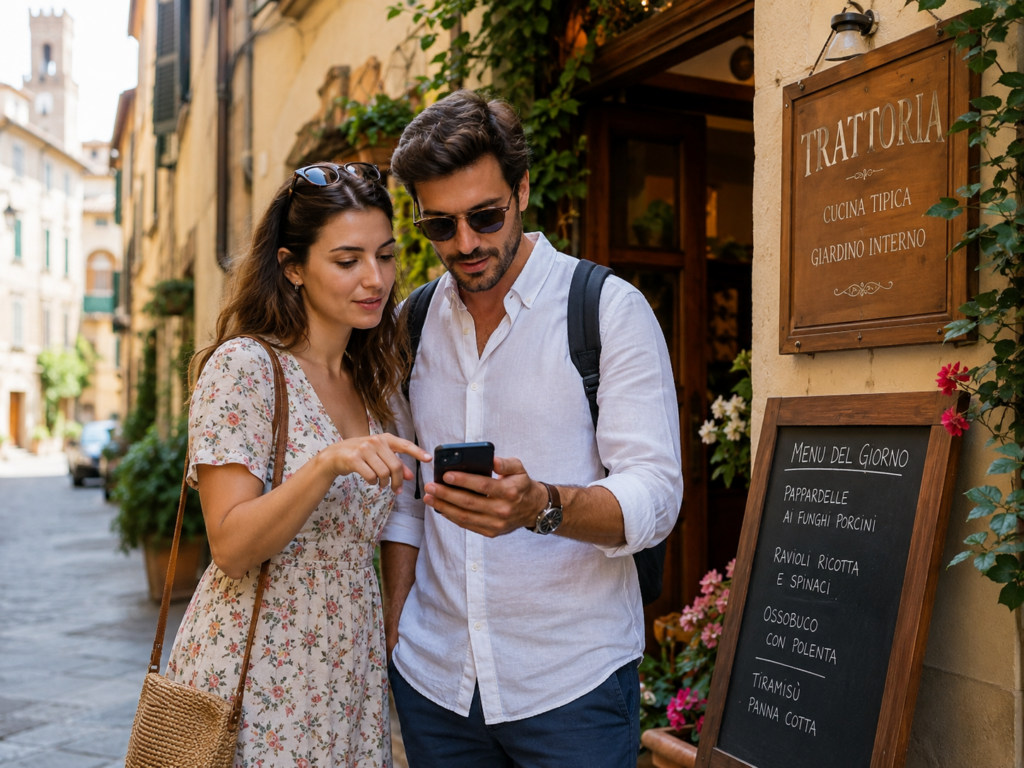
In Italy, the restaurant you are looking for may be down an alley, behind an unmarked door, closed on Tuesdays despite what the guidebook says, and waiting to confirm your table through WhatsApp.
 This post was created in paid partnership with Holafly. As always, all editorial opinions and wording are our own.
This is why arriving with mobile data has become less of a luxury than a remarkably useful piece of travel planning.
When I first began traveling in Italy, finding a restaurant often involved a paper map, several wrong turns and an increasingly animated conversation with someone whose directions depended heavily on hand gestures. There was considerable charm in all of this—until one realized the restaurant had stopped serving lunch ten minutes earlier.
Today, a reliable connection can help you find a market, translate an unfamiliar dish, check a train schedule, reserve a wine tasting or discover that the restaurant you had planned to visit is on vacation for the entire month of August.
Choosing the best eSIM for Italy means you can arrange that connection before leaving home, rather than spending the first hours of an Italian holiday looking for a phone shop.
 What Is an eSIM?
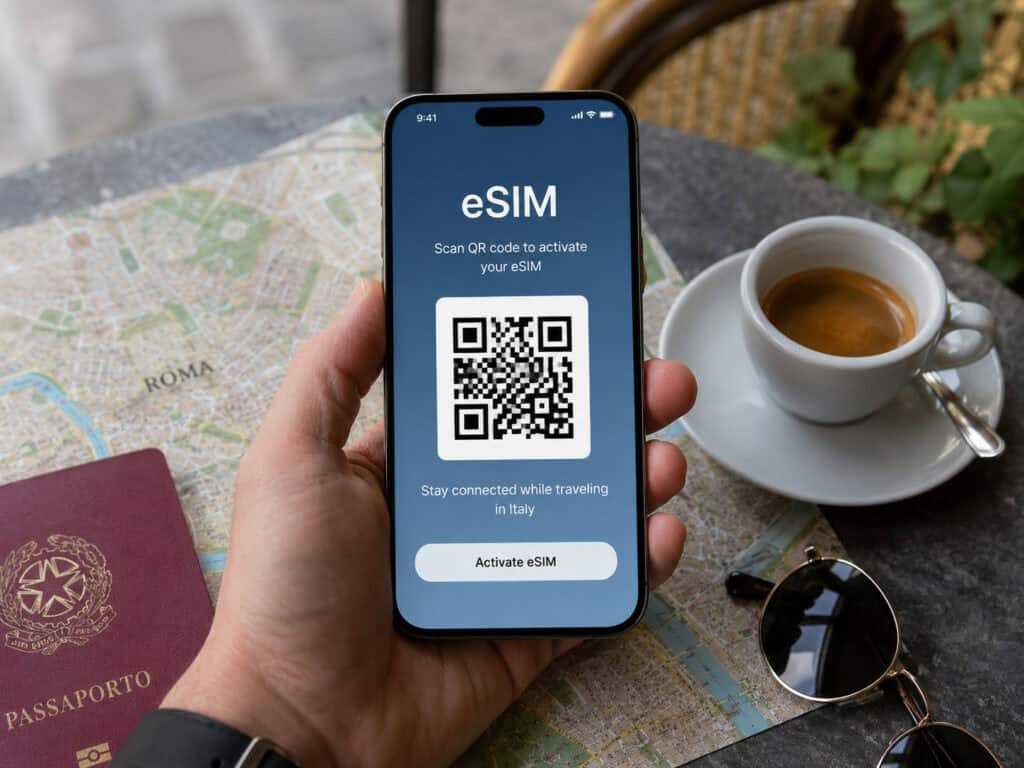
An eSIM is a digital version of the small physical SIM card traditionally inserted into a phone. On a compatible, unlocked device, the eSIM profile can usually be installed using an app, a QR code or instructions supplied by the provider.
Once it is installed and activated, the eSIM connects your phone to a local mobile network and provides internet access without requiring you to remove your regular SIM card.
That can be particularly convenient for travelers who want to keep their usual phone line available while using the eSIM for data. Exactly how calls, texts and data are handled will depend on the phone, carrier and settings, so it is worth checking these before leaving home.
Why an eSIM Is Useful in Italy
It is perfectly possible to travel through Italy without being permanently attached to one’s phone. In fact, looking up from it is highly recommended. There are frescoes, piazzas and extremely well-dressed Italians to observe.
But mobile data is enormously helpful when you need it.
Italy’s cities generally have strong mobile coverage, while connections may be less dependable in mountainous areas, isolated stretches of countryside and very small villages. The quality of service will depend on the Italian network used by the eSIM, not simply on the eSIM provider itself.
An eSIM also allows travelers to avoid—or at least compare—the international roaming charges imposed by their regular carriers. Some American plans include overseas service; others charge a daily fee. Before buying anything, calculate what your existing plan would cost for the entire trip.
What to Check Before Buying the Best eSIM for Italy
Not all eSIM plans are alike, and “unlimited” does not always mean that every feature is unlimited under every circumstance. Before buying, look at the details.
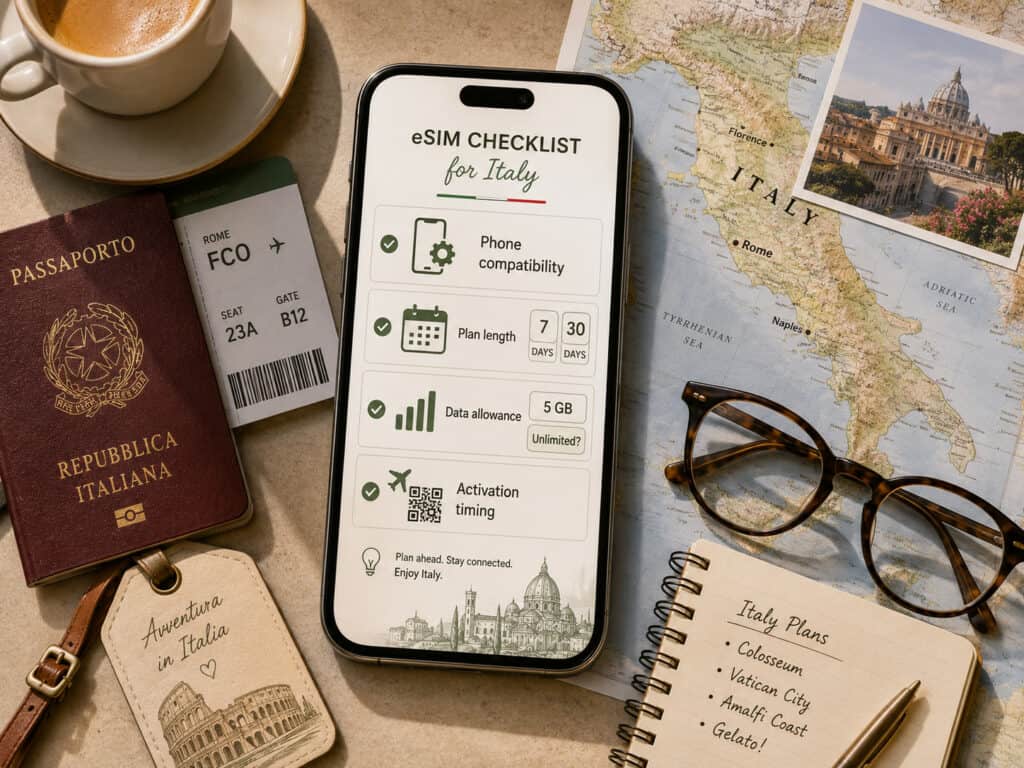 Check Your Phone
Make sure the phone supports eSIM technology, is unlocked and is compatible with the provider you plan to use. Many newer iPhones, Google Pixel phones and Samsung Galaxy models support eSIMs, but the safest course is to check the exact model.
Look at the Length of the Plan
Choose a plan that covers the full trip, including arrival and departure days. A seven-day plan is not much help on the eighth morning when you are trying to locate the train to the airport.
Understand the Data Allowance
Some plans include a fixed amount of data. Others offer unlimited data but may apply fair-use policies, speed reductions or separate limits on hotspot use.
Travelers who mainly use maps, email, messaging and restaurant websites will require considerably less data than those uploading videos, streaming films or turning their phones into portable offices.
Find Out When the Plan Activates
An eSIM can often be installed before departure and activated upon arrival, but procedures differ. Read the instructions before leaving home, preferably while enjoying reliable Wi-Fi and access to any passwords or verification codes you might need.
The baggage carousel at Fiumicino is not the ideal setting for a technological crisis.
How Connectivity Improves a Food-Focused Trip
Italian cooking is intensely regional. What you should eat in Bologna is not what you should order in Palermo, and the pasta shape treated with reverence in one province may be regarded with complete indifference in the next.
A mobile connection will not tell you whether a restaurant is wonderful. That still requires curiosity, judgment and, occasionally, luck. But it can help you reach the front door.
Finding Markets and Restaurants
Maps are invaluable when searching for food markets such as Venice’s Rialto Market, Florence’s Mercato Centrale or Bologna’s Quadrilatero.
 They are even more useful when locating a family-run restaurant on a narrow street where the numbers appear to have been assigned during a period of national exuberance.
Do not rely entirely on large review platforms. Check the restaurant’s own website and social media pages, consult Michelin or trusted local guides, and look at recent information about opening days and hours.
In Italy, “open now” should occasionally be regarded as an optimistic suggestion.
Making Reservations
Many restaurants, cooking schools and wineries accept reservations online or through WhatsApp. A stable connection makes it easier to confirm arrival times, receive directions and notify a restaurant when a delayed train has destroyed your carefully constructed schedule.
Popular restaurants and wineries should still be booked in advance. An eSIM is useful, but it cannot manufacture a table at Osteria Francescana on Saturday evening.
 Translating Menus
Menus throughout Italy contain regional terms that may be unfamiliar even to travelers who speak some Italian. Translation tools can help identify ingredients and cooking methods, particularly when a menu is handwritten or available only through a QR code.
Translation should not eliminate adventure. There are moments when one should simply order what the waiter recommends and hope for the best.
It is, however, useful to know whether the “local specialty” involves tripe before making that commitment.
Navigating Between Meals
Food-focused trips rarely remain conveniently in one place. A day might include a train from Florence, a bus into Chianti, a winery visit and dinner in a village where taxis are largely theoretical.
Mobile data can help with train schedules, directions, transportation apps and last-minute changes. Downloading offline maps provides additional insurance in places where the signal becomes weak.
eSIM or Physical SIM?
A physical Italian SIM can still be a good choice, particularly for a longer stay or for travelers who need a local telephone number. Buying one may require visiting a store, presenting identification and waiting while the service is activated.
An eSIM removes the need to swap tiny pieces of plastic while standing beside one’s luggage. It can often be installed before departure and used shortly after arrival.
Many travel eSIMs are data-only, however, and do not include a local number for conventional calls or SMS messages. Messaging services such as WhatsApp will generally continue to work, but travelers should check exactly what the chosen plan includes.
 Choosing an eSIM for a Multi-Country Trip
For a trip confined to Italy, a country-specific eSIM may be sufficient.
For an itinerary that continues into France, Spain, Switzerland or elsewhere in Europe, a regional plan may be more convenient than buying a separate eSIM each time you cross a border.
Holafly offers a Europe eSIM that includes Italy and a range of other European destinations. Its plans are designed for travelers who want to remain connected across several countries without repeatedly changing data plans. Go to https://esim.holafly.com/esim-europe/ for all the details.
Before purchasing, check the current list of included destinations, the number of days covered, hotspot provisions and any fair-use terms. These details can change and should match the way you actually use your phone.
A Little Preparation Goes a Long Way
An eSIM is not the most romantic part of planning an Italian journey. It cannot compete with choosing a hotel in Rome, reserving a table in Bologna or contemplating how much pasta it is reasonable to consume during a week in Puglia.
But it can make all of those pleasures easier to arrange.
Install the eSIM before departure, save the provider’s instructions, download essential maps and reservations, and understand how your regular phone line will behave while the travel eSIM is active.
Then put the phone away whenever possible.
After all, the purpose of staying connected in Italy is not to spend the trip staring at a screen. It is to find the restaurant, reach the market, arrive at the winery—and get on with the eating.
Frequently Asked Questions About eSIMs for Italy
Do I need an eSIM if my regular plan includes international roaming?
Possibly not. Compare the complete cost and data terms of your carrier’s international plan with those of an eSIM. Some roaming plans are convenient and competitively priced, while others impose daily charges or data limitations.
Will an eSIM work in rural Italy?
It depends on the local mobile network used by the eSIM. Coverage is generally strongest in cities and populated areas and may become weaker in mountains, remote countryside and small villages.
Can I use one eSIM throughout Italy?
Yes. An Italy eSIM should work across the country without requiring a new plan each time you travel between regions, provided the destination has network coverage and the plan remains active.
Can I keep my regular phone number?
Many compatible phones allow a regular line and an eSIM to remain installed at the same time. Whether the regular number can receive calls and texts—and what those communications may cost—depends on the phone, home carrier and settings.
Does a travel eSIM include telephone calls and text messages?
Not necessarily. Many travel eSIMs provide data only. Check the plan details if you need a local number, conventional voice calls or SMS service.
Should I install the eSIM before leaving home?
Yes. Installation is generally easier while you have dependable Wi-Fi and access to the information required by the provider. Follow the activation instructions carefully so the plan does not begin earlier than intended.
Learn more about Holafly’s Europe eSIM here: If you want the best eSim for your travel to Italy then choose “Holofly” for your best guidance and help in your travelling. Go to
https://esim.holafly.com/esim-europe/
HERE ARE SOME CHEWING THE FAT POSTS THAT MAY INSPIRE VISITS ON YOUR NEXT TRIP TO ITALY…
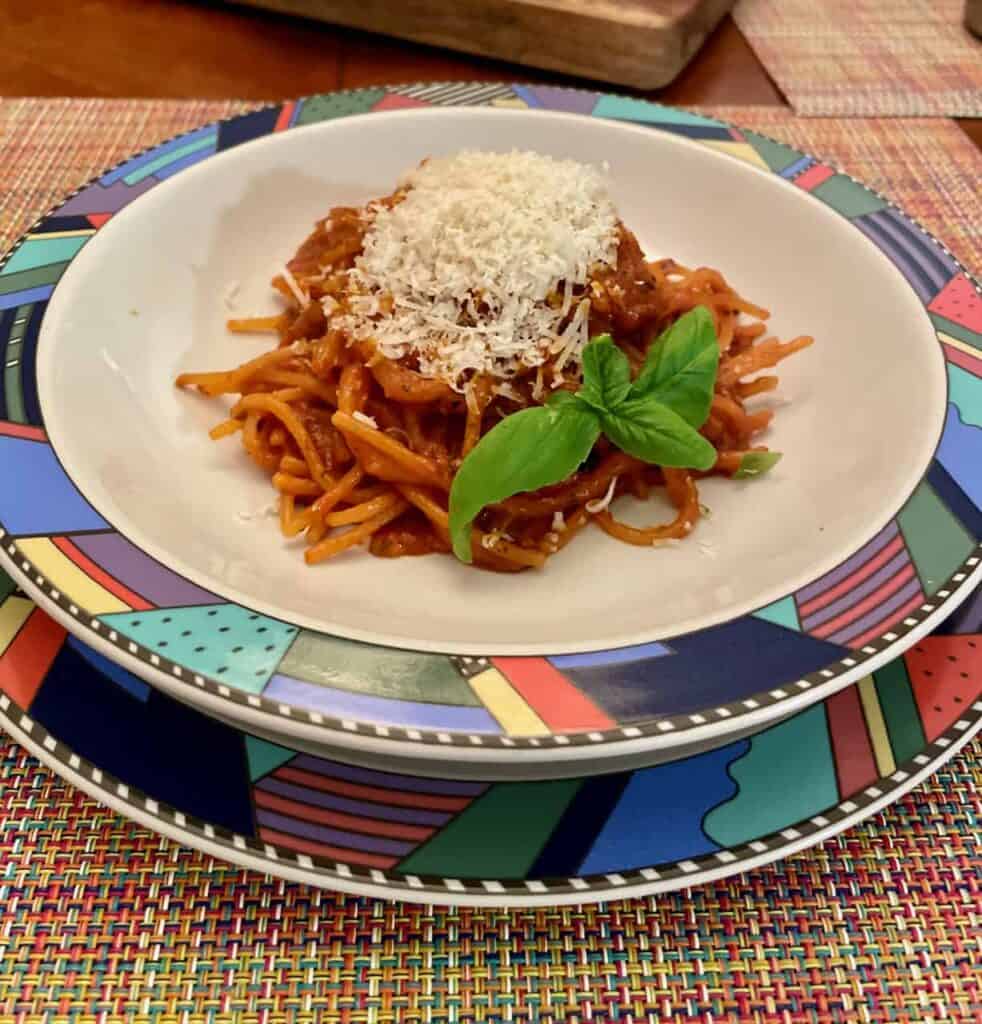
Stanley Tucci: “Searching for Italy” Recipe: Puglia’s Spaghetti all’Assassina

From Stanley Tucci’s “Searching For Italy”: Spaghetti Alla Nerano