When One Duck Went Global
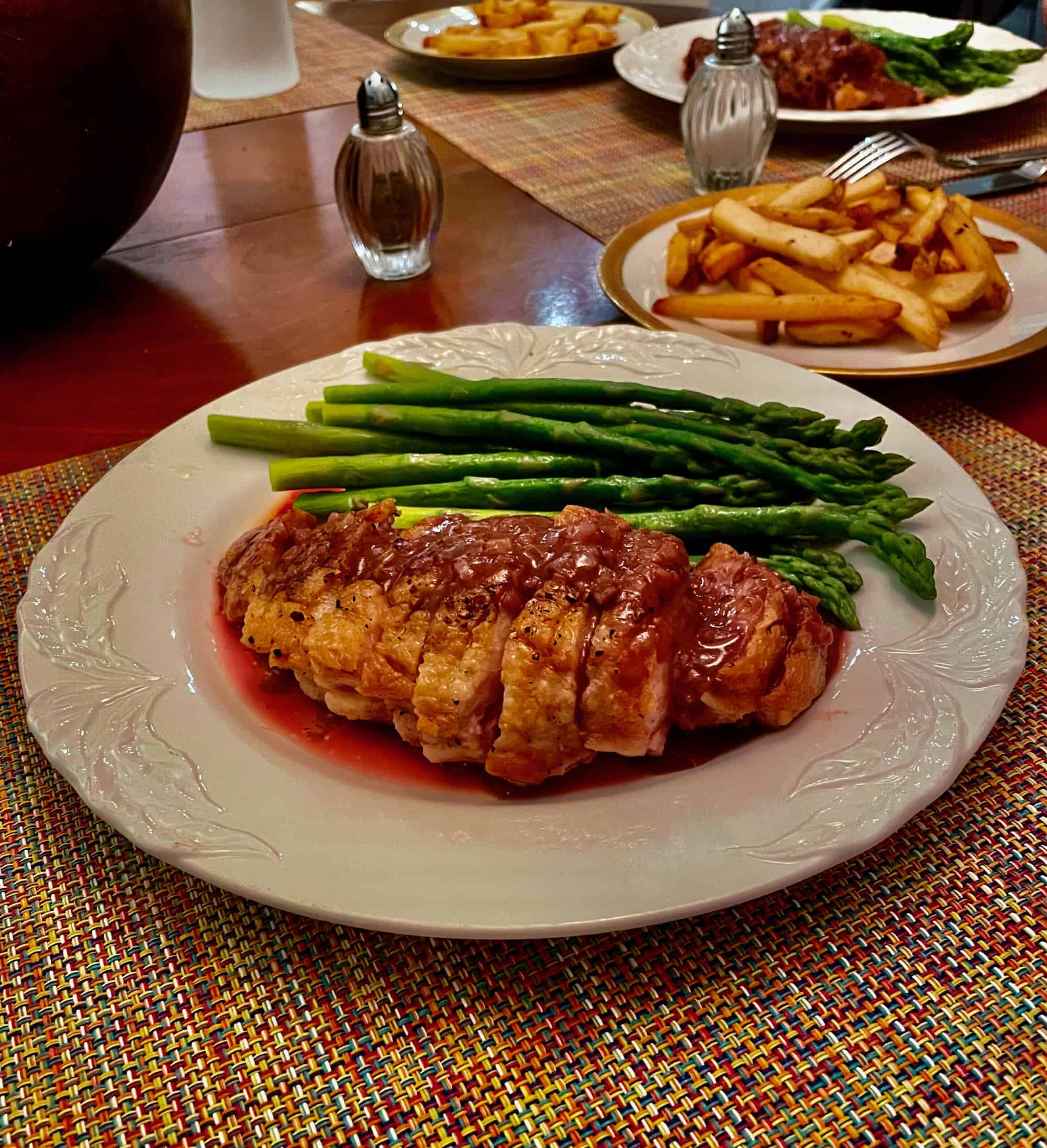
You may remember last March’s duck breast post — the one that mysteriously went viral in China. The analytics didn’t just rise… they soared. Thousands upon thousands of readers appeared seemingly overnight. I never did figure out what caused the stampede, but that duck clearly made an international impression. If you were part of that wave — welcome back.
Duck, it seems, has a way of getting people’s attention. It always has. Rich, deeply flavorful, and unmistakably indulgent, duck manages to feel celebratory even on an ordinary weeknight. The crisp skin alone can stop conversation at the table. Properly cooked, it’s luxurious without being fussy, comforting without being predictable — the kind of dish that feels timeless and just a little bit special. Which is exactly why duck confit has achieved near-mythic status.
The Method That Made Duck Confit Possible at Home

Traditional French duck confit is one of the great achievements of farmhouse cooking. Duck legs are salt-cured and then slowly cooked until meltingly tender. When reheated and crisped, the skin becomes deeply golden while the meat remains impossibly succulent.
The result is extraordinary.
But the classic method requires a large quantity of duck fat — something that has kept many home cooks admiring confit from afar rather than attempting it themselves.
Melissa Clark offered a smarter solution. In her cookbook In the Kitchen with a Good Appetite, she demonstrated that duck legs actually render enough fat during slow cooking to confit themselves. Her method preserves everything that matters — the curing, the slow cooking, and the deeply concentrated flavor — while eliminating the need for quarts of additional duck fat. Same technique, same deeply satisfying result, and far more practical for a home kitchen.
It still takes time, but most of that time is passive. The duck quietly does its work in the oven while the house fills with one of the most irresistible aromas in cooking.
 Why This Recipe Is Worth Making
What comes out of the oven is everything duck confit promises to be: intensely savory meat that yields effortlessly to a fork and crisp skin that shatters at the lightest touch.
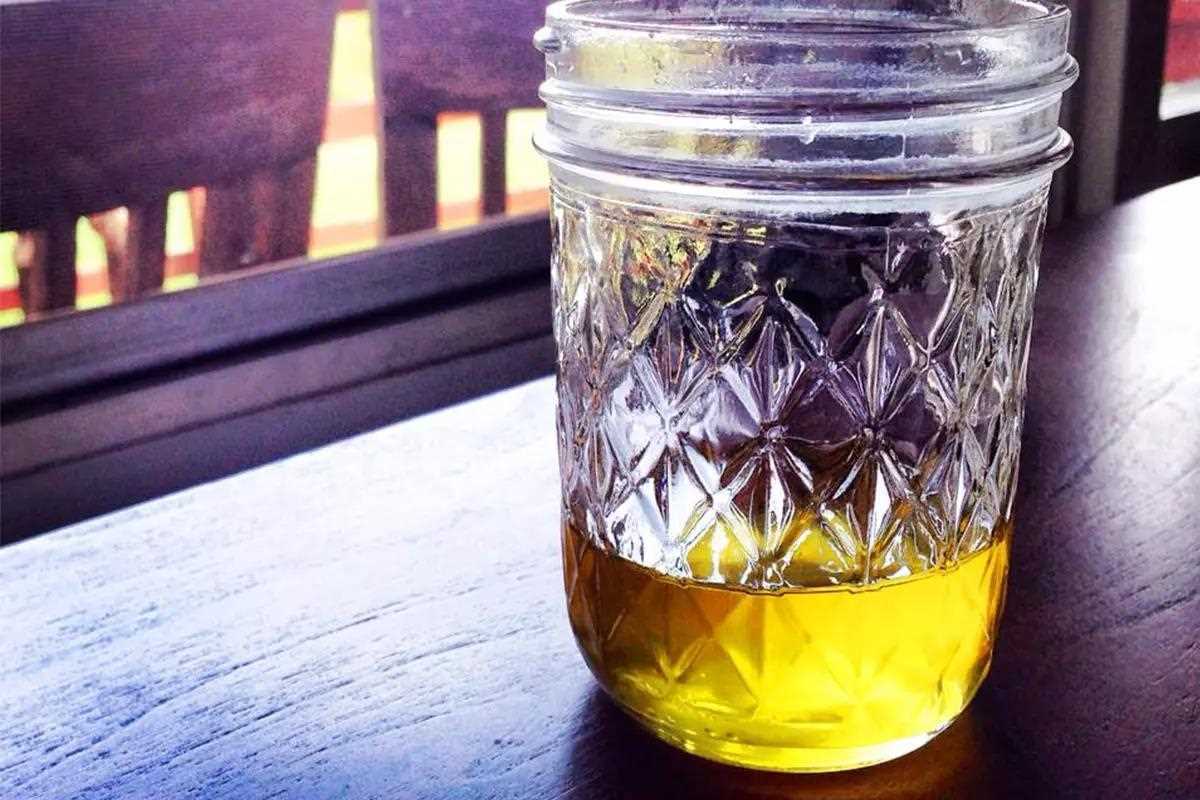
And then there is the bonus. As the duck cooks it produces beautifully clear rendered duck fat, one of the great luxuries of the kitchen. Save every drop. Roast potatoes in it, sauté greens, crisp mushrooms, or use it anywhere you want instant depth of flavor. One pan of duck confit doesn’t just give you dinner — it quietly improves everything else you cook for the next week.
Where to Find Good Duck
 That viral duck breast recipe last spring — the one that generated such enthusiasm among readers in China — happened to use duck breasts from Joe Jurgielewicz & Son Ltd., a family-run producer of Pekin duck whose roots go back to Long Island in 1933.
Now based in Hamburg, Pennsylvania, the Jurgielewicz family supplies ducks to restaurants, private clubs, and hotels across the country. Their birds are known for an excellent balance of meat and fat — exactly what cooks want when crisp skin and rich flavor matter. That balance makes them particularly well suited for recipes like duck confit.
The company remains family owned and is run by veterinarians Dr. Joe Jurgielewicz and Dr. Jim Jurgielewicz, who oversee the entire process from hatching through distribution.
They have also begun experimenting with new products, including gourmet duck dumplings inspired by both traditional Peking duck flavors and Southwestern fajita spices — proof that duck adapts easily to cuisines far beyond the French farmhouse traditions that gave us confit.
If you would like to explore their products, including duck legs perfect for this recipe, you can find them at: www.tastyduck.com
Now, let’s make confit.
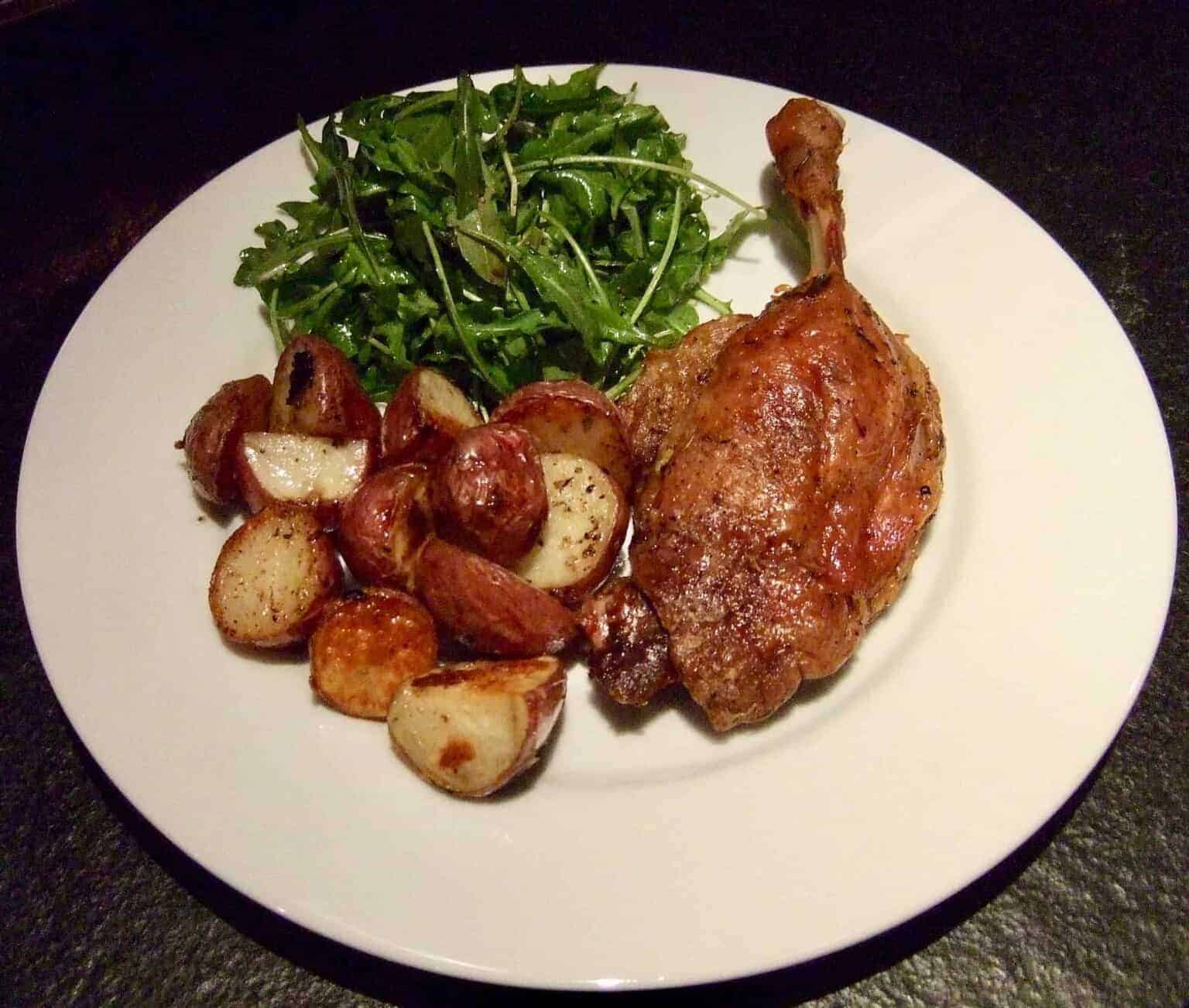
An absolutely superb way to enjoy the wonderful richness and mouth-watering crispness of a true Duck confit.Easy Duck Confit
Ingredients
Directions