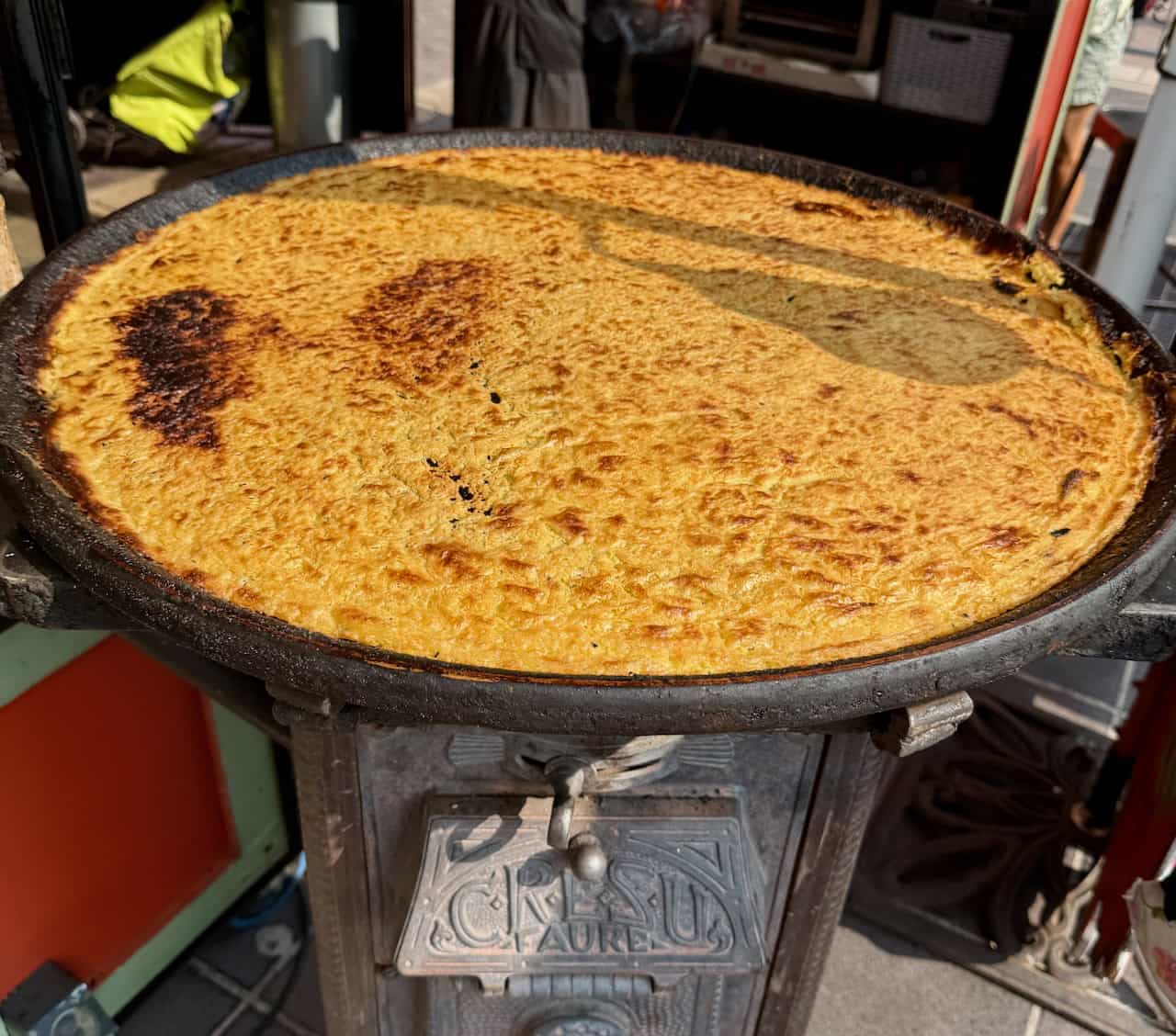
Gluten-free pancakes are now widely available, but we went to France to find the original
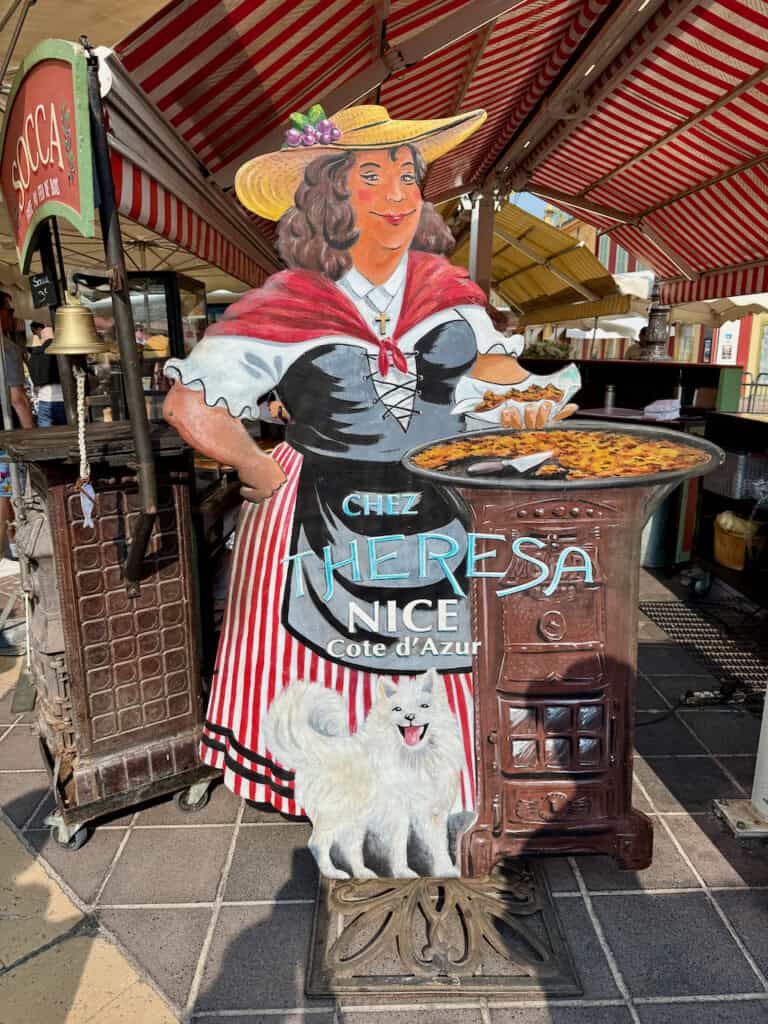
The most obvious place to look is on Nice’s famous Cours Saleya
You might imagine that Socca pancakes would be everywhere here —
Not having them would be akin to being in Naples and not finding a pizza — but checking various restaurant menus for the pancake yielded not a one.
Oddly, Socca pancakes seem relegated to a single stand in the market.
Presided over by just one woman. Her method of making them is simple: Chickpea flour is stirred into a mixture of water and olive oil, forming a loose batter. The mixture is then placed on a tin-plated copper baking pan, and into an open oven it goes. After emerging, it is cut into irregularly shaped slices and put into a paper cone. You are asked if you would like the traditional pepper topping — which is a good idea, because in all honesty, the Socca could use some seasoning. If you want to buy some chickpea flour, that, too, is hard to come by at Cours Saleya. However, a source there offered some offbeat advice. Surprisingly, the flour can be found on Amazon.com, where there are no less than 15 varieties. Here’s the link: https://amzn.to/3FPXXwt so your pick out your Socca and make this recipe without having to trek all the way to Nice.
Here is a recipe for making Socca pancakes at home
Using the broiler in your home oven will create your own ode to gluten-free.
Since the pancakes are made with chickpeas, they are naturally gluten-free!
GLUTEN FREE SOCCA PANCAKES
Socca pancakes have a a toasty, nutty richness—thanks to the chickpea flour that stars in the show. It’s got an earthy depth, like roasted hazelnuts and warm summer soil (in the best way), with a whisper of bitterness that keeps things interesting. Then comes the olive oil—generous and fruity—lending the edges that irresistible golden crispness, while the inside stays soft and tender, almost creamy if it’s fresh off the skillet.
Ingredients
- 1 Cup chickpea flour
- 1 Teaspoon salt
- 1 Teaspoon ground black pepper
- 4 Teaspoons olive oil
- 1/2 Large onion, thinly sliced (optional)
- 1 Tablespoon fresh rosemary leaves (optional)
Directions
- Step 1 Heat oven to 450 degrees F.
- Step 2 Put a well-seasoned or nonstick 12-inch pizza pan or cast-iron skillet in oven.
- Step 3 Sift chickpea flour into a bowl
- Step 4 Add salt and pepper (more than 1 teaspoon can be used, if desired)
- Step 5 Then slowly add 1 cup lukewarm water, whisking to eliminate lumps.
- Step 6 Stir in 2 tablespoons olive oil. Cover and let sit while the oven heats, or as long as 12 hours. The batter should be about the consistency of heavy cream. If using onion and rosemary, stir them into the batter.
- Step 7 Pour 2 tablespoons of oil into heated pan, and swirl to cover pan evenly. Pour in batter, and bake 12 to 15 minutes, or until the pancake is firm and edges set. Heat broiler, and brush top of socca with 1 or 2 tablespoons of oil if it looks dry.
- Step 8 Set Socca a few inches away from broiler for a few minutes, just long enough to brown it spottily.
- Step 9 Cut it into wedges, and serve hot or warm.




The Italian farinata (also known as fainâ in Liguria) clearly predates the French socca. They are essentially the same dish—an unleavened chickpea‑flour pancake—but farinata emerged first in Liguria, Italy, before being adopted and adapted in Nice and Provence as socca
Farinata — originated in Liguria (Italy), medieval period (at least 15th century, based on documentation; legend dated to 1284).
Socca — the French variant, adapted later in and around Nice, becoming widely known from the 17th–20th centuries onward.
Egregio Alberto, I cannot thank you enough for this addition to our post. While on the Fremch Riviera, we found numerous items of menus that claimed Nicoise heritage but could not have more Italian. Count Zucchini Blossoms and endless pizzarie Buon Appettito! Monte